 English
 Русский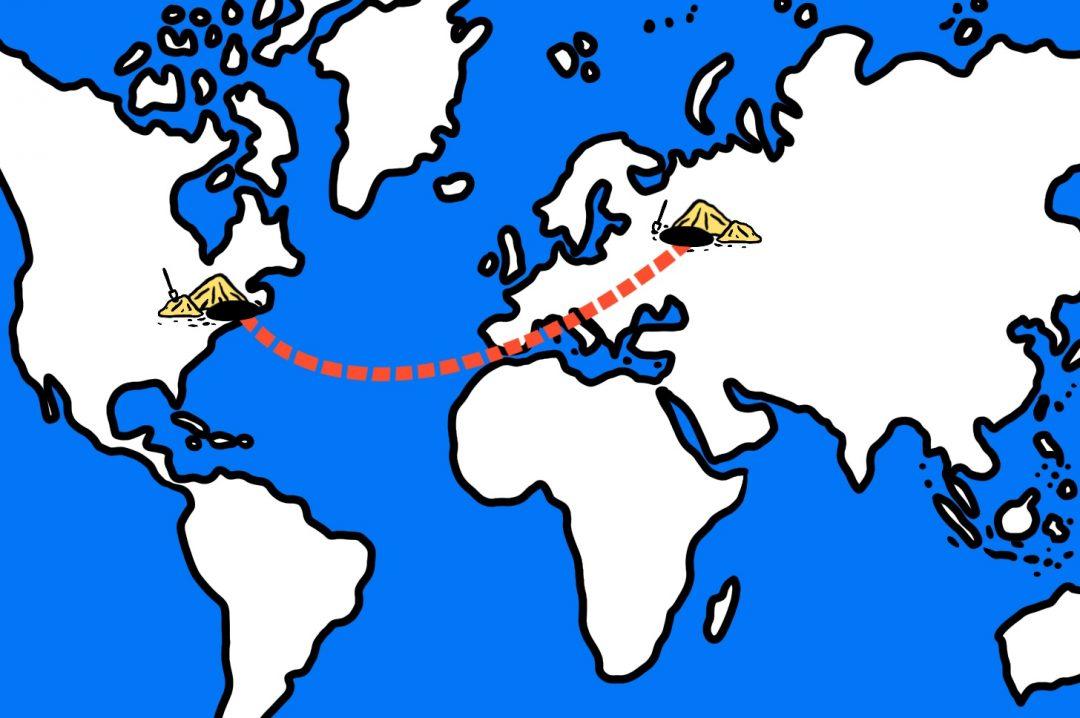
Imagine it's August 16, 1969, you're sitting in the USSR and desperately want to listen to psychedelic American rock from the Woodstock festival. You open Soviet newspapers — and there's only news about a milkmaid from Norilsk's achievements. You turn on Soviet radio — and there's "Pesnyary" and VIA "Novy Elektron". You go to a Soviet cinema, and they're only showing "White Sun of the Desert".
You take a small entrenching shovel.
You stick it in the ground.
You dig a tunnel under the Atlantic.
You emerge in the USA.
American law enforcement grabs you and drives you to prison. But in that short time while they're driving you there, you hear Jefferson Airplane on the radio, and you say with a thick Russian accent: "Totally worth it".
That's VPN.
What is VPN
VPN is a technology that allows you to make a virtual tunnel and use networks and resources that you can't connect to directly.
For example, you have a file server in your office that you can only connect to when you're in the office. If you're working from home today, those files aren't accessible to you. But if there's a VPN server set up in the office, you can connect to it from home — and then it's as if you're in the office, you have access to all office resources. You can print an obscene message on the office printer.
Or, for example, you find yourself in a totalitarian state that has blocked all websites about cacti. And you urgently need to read about cacti. You take a VPN service that allows you to connect to the internet through a country where cacti are legal. You connect via VPN, and it's as if you're in another country. No one will stand between you and cacti anymore. Also, YouTube will show you local ads.
How a VPN network works
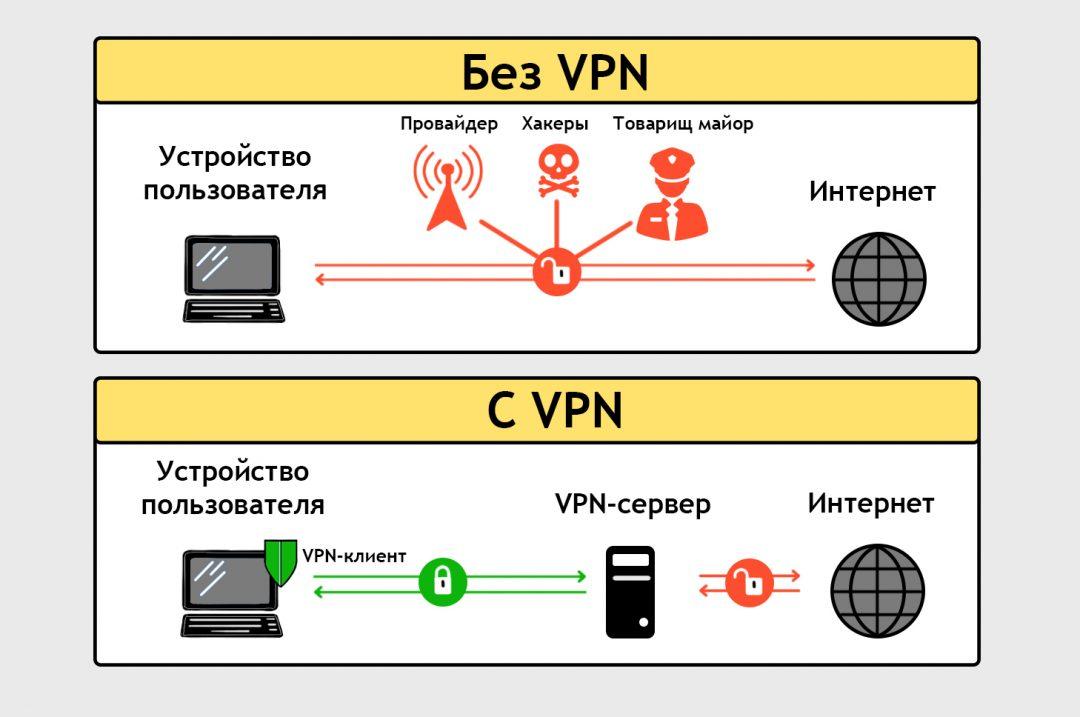
Most often it's like this: there's a VPN server that takes care of all the configuration, security, and other technical aspects. When a client connects to such a server, a special connection is established between them, and all data is encrypted.
A client can be any device: a phone, computer, or smart microwave. The main thing is that this device can contact the VPN server and say: "Hey, let's establish a connection!".
When a VPN connection (also called a VPN tunnel) is established, everyone who has connected to this same server can safely exchange data with each other. Safely means that the data is encrypted and only the server knows what's actually happening on the network.
Without a secure connection, your provider knows which websites you visit, which messengers you use, and what you search for in search engines. When you connect to a VPN, the provider only sees the fact of the VPN connection itself, but what happens inside it — remains unknown to them.
VPN doesn't mean security and anonymity
Many people think that if someone connects via VPN, they're now an invulnerable hacker, completely anonymous and untraceable. In reality, that's not the case.
WebRTC. This technology is initially enabled in almost every browser, and with its help, everyone can find out your real IP address, even if you're using a VPN. You can't find out your home address directly from it, but you can find out who your provider is. If law enforcement suspects you're doing something illegal, they can go to your provider and demand your real address and passport data.
If you don't want everyone to know your IP, you need to look for VPN servers that monitor this themselves and know how to disable WebRTC.
VPN server. It sounds strange, but most often it's the server itself that poses the greatest threat to anonymity and security. It's the server that knows everything about those who use its VPN services: who visits which websites, what they do, and who they chat with.
Free VPN servers make money by selling your digital profile to advertisers. They know your interests and want to know as much about you as possible, which is why they give free access to their services.
Paid servers theoretically live on user subscriptions, but how things actually stand — we don't know. Real paranoids assume that even paid servers transmit data to anyone willing to pay for it.
The safest way is to create your own VPN server that only you control. The difficulty is that proper and complete setup requires a lot of technical knowledge. But it's doable, although it's not entirely clear why.